Layering Investigation
1. What Have you learned about Layering?

2. How do contemporary artists use the concept of layering in their artwork?
Takashi Murakami's art incorporates a variety of media and is typically referred to as "superflat". It has been praised for its use of color, assimilation of elements from Japanese traditional and popular culture, flat/glossy surfaces, and text that may be regarded as "cute," "psychedelic," or "satirical" all at the same time. Smiling flowers, iconic characters, mushrooms, skulls, and Buddhist iconography are among his most well-known repeating motifs. For layering, most of his artwork incorporates it. He mixes and matches a lot of his characters together with different backgrounds that either contrasts the rest to make it pop out or matches with everything else.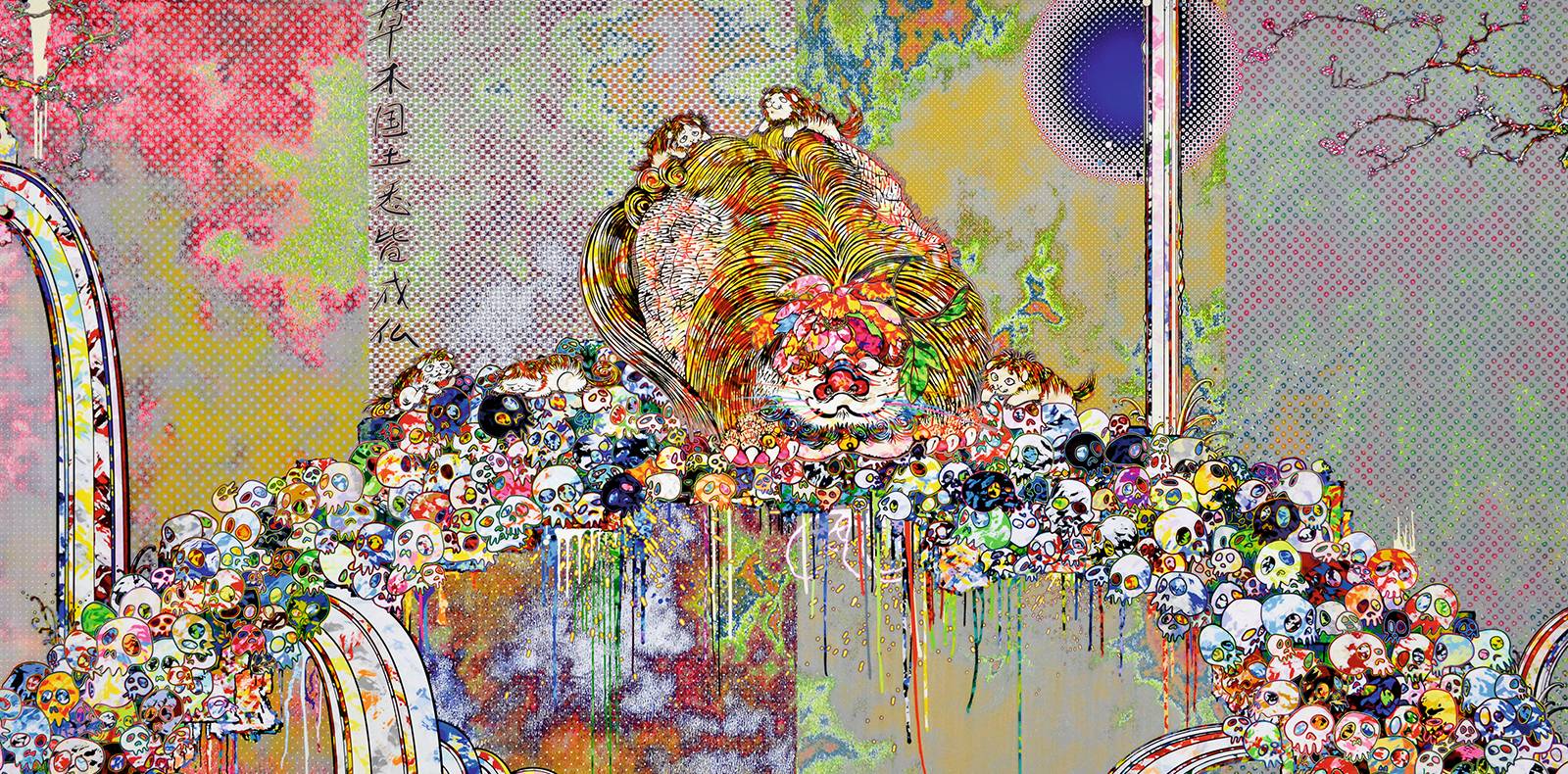
For my second film idea, I am doing a story about a man who has been working too hard since he has become an adult and hasn't been able to enjoy life in a while. A bigfoot/monkey type creature arrives at his home to try and help get out of his house an to not worry about work as much. To teach him to have a better work-life balance. The whole idea is that the creature is basically the innocence or the childhood of the working him. It's how he felt when he was younger; a creature that was able to be free in the wild and not have many worries. The way want to use layering for this would be to have at some point at the end a shot of the man looking out of the window seeing the creature leaving. At this point the man has learned from the creature. Then have the same exact shot, but of the creature. They two shot would be playing ontop of each other showing the audience the they are now the same person. The man has gained his sense of happiness again and eager to explore the world.
Example:
4. Is there something you found in your investigation that specially interested or inspired you?
While investigated Takashi Murakami I learned that each of his ironic characters have a deeper meaning to them, which can also be considered layering in another sense. This has inspired me to try and make a few of my films have a little more depth to them. To try and have the audience dig a little deeper to understand what I am trying to communicate through my story and characters.
Comments
Post a Comment